
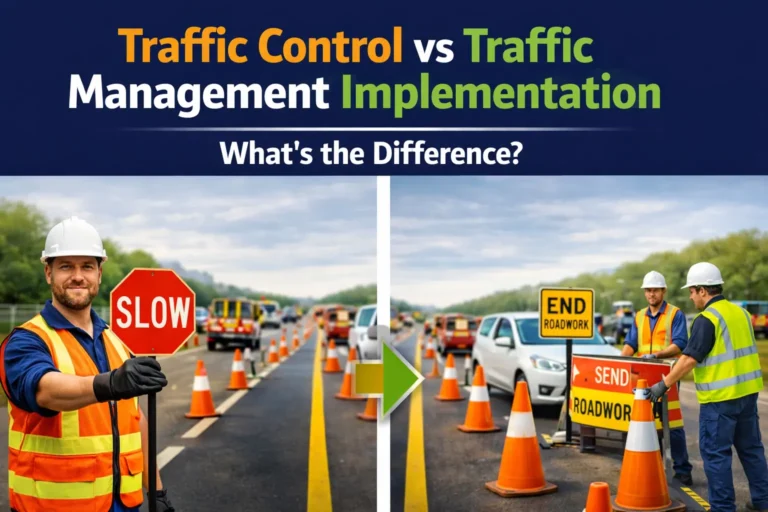
If you’re looking to start working in roadworks, construction, or civil infrastructure, you’ve probably come across the terms traffic control and traffic management implementation (TMI).
Both qualifications are important for keeping roadworks safe, but many people new to the industry aren’t sure how these two roles differ.
Understanding the difference between traffic control and traffic management implementation can help you decide which training you need and how to build a career in traffic management.
In this guide, we’ll break down what each role involves and why many employers prefer workers who are trained in both.
What is Traffic Control?
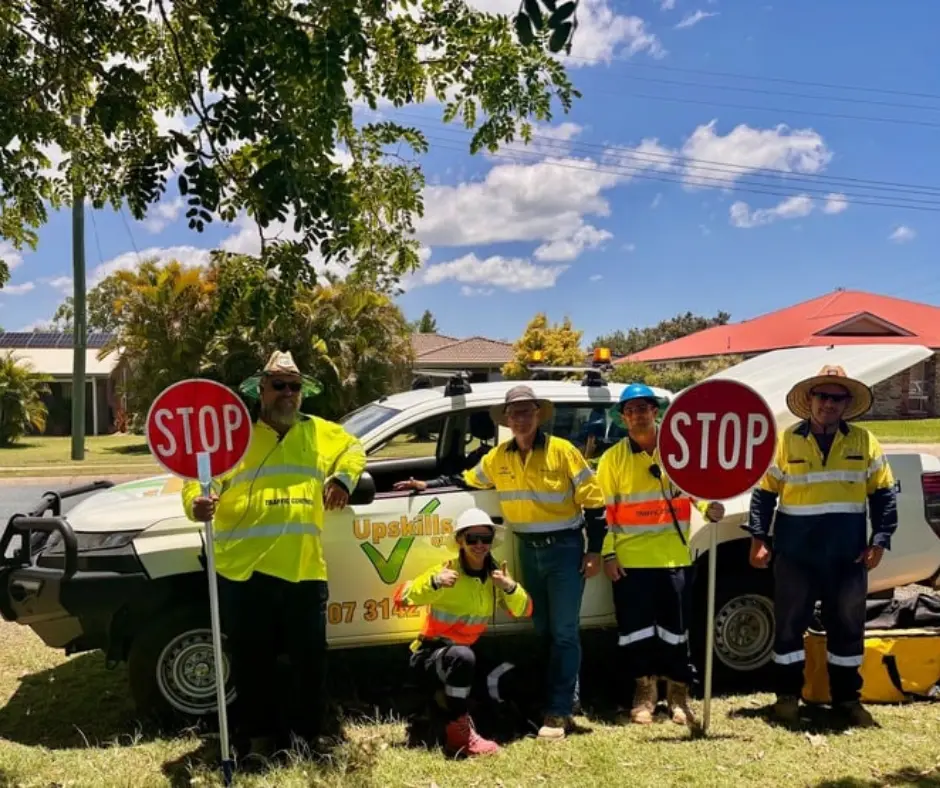
Traffic control focuses on safely directing vehicles and pedestrians around roadworks or construction zones.
Traffic controllers are responsible for managing traffic flow so that work crews can operate safely while drivers and pedestrians move through the area without risk.
You’ve likely seen traffic controllers on worksites holding a Stop/Slow bat to guide vehicles through temporary work zones.
Common responsibilities in traffic control include:
- Directing vehicles using a stop/slow bat
- Communicating with other traffic controllers on site
- Managing the safe movement of pedestrians
- Monitoring traffic conditions around the worksite
- Following approved traffic management plans
- Helping keep workers and road users safe
For many people, traffic control training is the starting point for a career in traffic management. It provides the essential knowledge and skills needed to begin working on construction and roadwork projects.
Because road upgrades and infrastructure projects are continuing across Queensland, qualified traffic control workers are consistently in demand.
What is Traffic Management Implementation (TMI)?
While traffic control focuses on directing traffic, traffic management implementation (TMI) involves setting up the traffic management systems used on worksites.
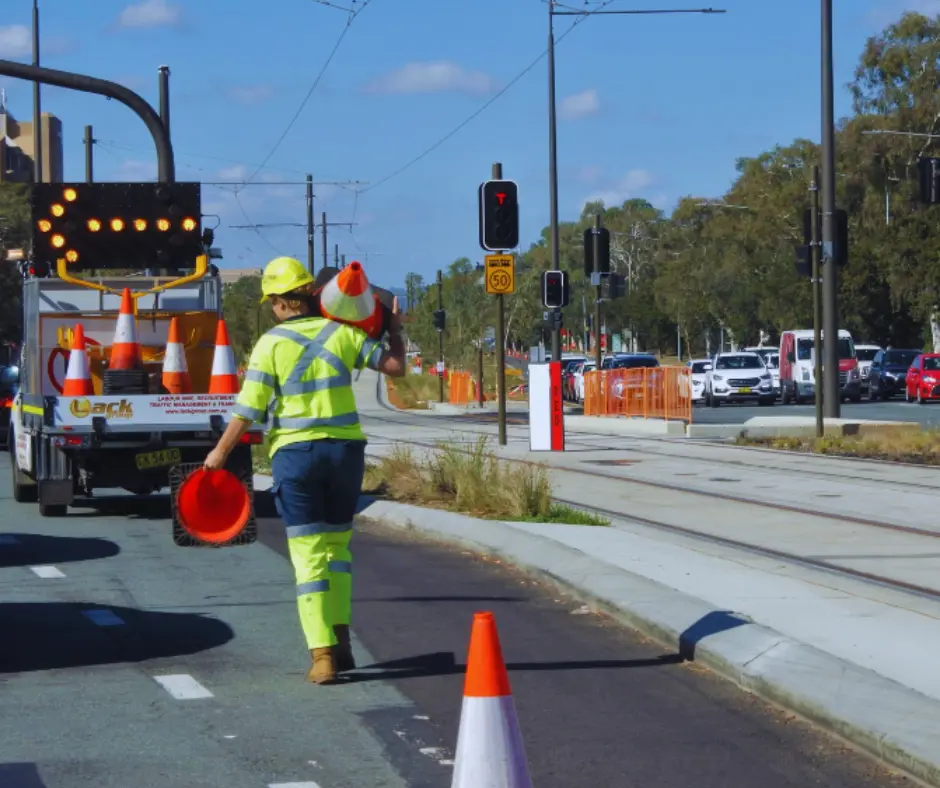
Workers trained in traffic management implementation are responsible for installing the signage, cones, and safety equipment required to guide traffic safely around work zones.
Before traffic controllers begin directing vehicles, TMI workers ensure the entire traffic management setup is correctly installed according to approved plans.
Responsibilities in traffic management implementation may include:
- Setting up traffic guidance schemes on worksites
- Installing road signs and traffic control devices
- Placing cones, barriers, and other safety equipment
- Creating safe work zones for construction crews
- Monitoring traffic setups to ensure they remain compliant
- Removing traffic management equipment once work is complete
Because traffic management implementation involves additional responsibility, workers usually complete TMI training after gaining some experience in traffic control.
Many civil contractors require workers responsible for site setup and traffic management plans to hold a traffic management implementation qualification.
The Key Difference Between Traffic Control and Traffic Management Implementation
Although the two roles work closely together, they focus on different parts of traffic safety.
Traffic Control
- Directs traffic around worksites
- Manages vehicle movement during roadworks
- Uses stop/slow bats to control traffic flow
Traffic Management Implementation
- Sets up traffic management systems
- Installs signs, barriers, and safety equipment
- Ensures traffic management plans are correctly implemented
Put simply, traffic management implementation prepares the worksite, while traffic control manages the traffic moving through it.
Both roles are essential for keeping road users and workers safe during construction and infrastructure projects.
Do You Need Both Qualifications?
While it’s possible to work with just a traffic control qualification, many companies prefer workers who are trained in both traffic control and traffic management implementation.
Having both qualifications can offer several advantages, including:
- Access to more job opportunities
- Higher earning potential
- More responsibilities on worksites
- Opportunities to move into supervisory roles
Workers who understand both traffic control and traffic management implementation are often more valuable to employers because they can assist with both traffic direction and site setup.
This flexibility allows companies to build stronger, more efficient traffic management teams.
Why Traffic Management Skills Are in Demand
The demand for trained traffic management workers continues to grow across Queensland due to:
- Ongoing road and infrastructure upgrades
- Civil construction projects
- Utility and telecommunications work
- Increasing safety requirements on worksites
Any project that affects public roads requires trained workers who understand traffic control and traffic management implementation procedures.
For this reason, traffic management remains one of the most reliable pathways into the construction industry.
Start Your Traffic Management Career with Upskills QLD
Upskills QLD provides nationally recognised training in traffic control and traffic management implementation, helping students gain the skills needed to work safely on construction and roadwork sites.
With experienced trainers and hands-on learning, Upskills QLD prepares students for real worksite conditions while meeting Queensland’s industry standards.
Whether you’re starting your career or looking to expand your skills, completing both traffic control and traffic management implementation training can open the door to a wide range of opportunities in the civil and construction industries.