
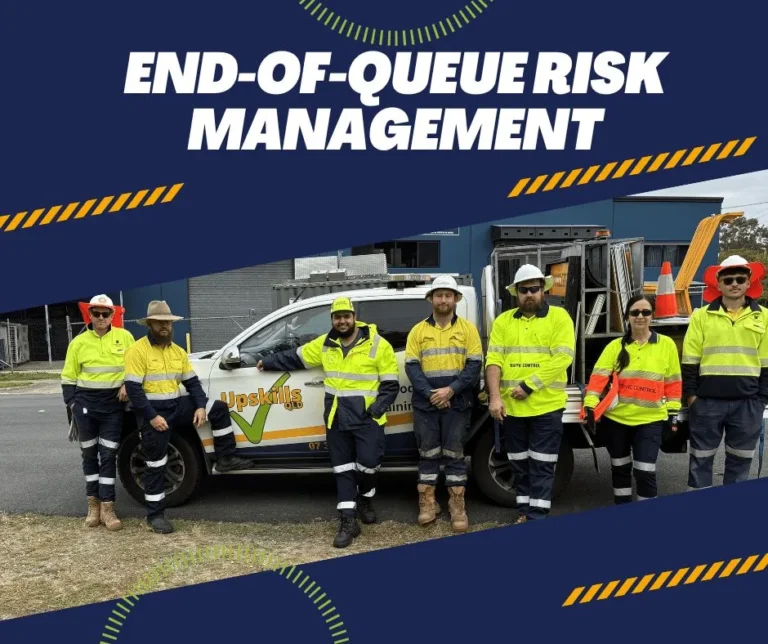
In recent weeks, two tragic incidents at the end of traffic queues at Queensland road worksites have resulted in the loss of two lives. Reported in the Department of Transport and Main Roads’ (TMR) July 2026 Temporary Traffic Management newsletter, these losses are a sobering reminder that end-of-queue (EOQ) risk is one of the most serious hazards on any temporary traffic management (TTM) site.
Dennis Walsh, TMR’s Chief Engineer for Engineering and Technology, used the newsletter to urge everyone involved in planning, designing, implementing, and monitoring TTM to take a fresh look at how EOQ risk is being managed on active worksites right now — not just at project kick-off.
Why EOQ Risk Deserves Constant Attention
The rear of a traffic queue is one of the most dangerous places on a road worksite. On high-speed roads, busy routes, or anywhere visibility is limited, a stationary or slow-moving queue can catch approaching drivers off guard with little warning.
What makes EOQ particularly challenging is that it isn’t static. Queue lengths, traffic volumes, and site conditions can shift significantly over the course of a single day. Controls that worked well when a project started may no longer be adequate weeks — or even hours — later as conditions change.
That’s why TMR is calling on the industry to:
- Review active worksites to confirm EOQ risks are still being effectively managed
- Reassess current traffic management arrangements against prevailing conditions, not just original plans
- Confirm controls remain effective as traffic volumes, queue lengths, and site conditions evolve
To support this, TMR has released a Safety Alert and an EOQ risk management fact sheet, designed to prompt team discussions and encourage a genuine review of existing practices. If your organisation manages, designs, or supervises TTM sites, these are worth building into your next toolbox talk.
This Isn’t a New Conversation — It’s Been Building
Looking back through TMR’s May 2025 Temporary Traffic Management newsletter, it’s clear EOQ management has been an active area of technical refinement for some time — and that edition had plenty else going on for the industry too.
Training Reform Was Already Underway
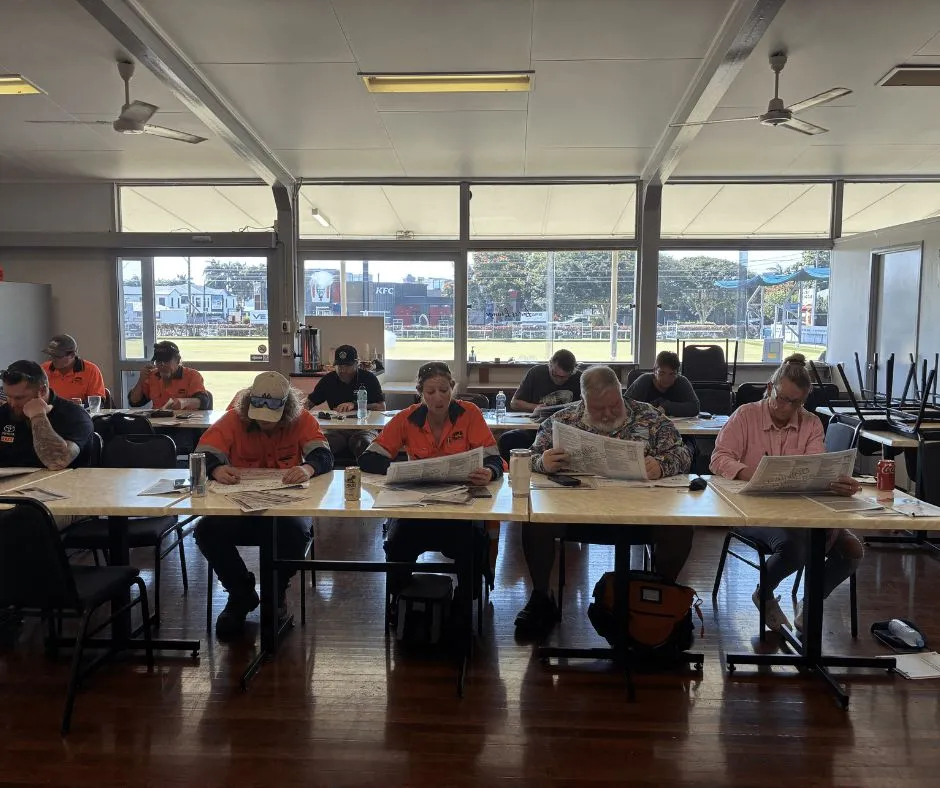
Back in May 2025, TMR confirmed it would maintain its own TTM training framework for Queensland, while harmonising elements of it with the national training framework where feasible. Rather than adopting the national model wholesale, TMR engaged broadly with industry — running a virtual information session followed by face-to-face regional sessions led by Troy Hansen — to make sure any changes were practical, effective, and genuinely improved safety outcomes on the ground. If you’re due for a renewal, it’s worth checking your Traffic Controller (TC) or Traffic Management Implementer (TMI) qualifications against the latest requirements, since this reform work is ongoing.
Councils Got a Seat at the Table
Queensland councils have long flagged the financial and operational challenges of meeting TTM standards. Following a resolution at the 2024 Local Government Association of Queensland (LGAQ) conference, TMR formed a working group — combining council officers, LGAQ representatives, and TMR personnel — to identify practical barriers to compliance and explore changes to technical standards and training. With 24 councils already involved since the group’s first meeting in February 2025, specialised training packages were planned for roll-out later in the year, targeted at regions with the greatest need.
The Technical Rulebook Was Already Evolving
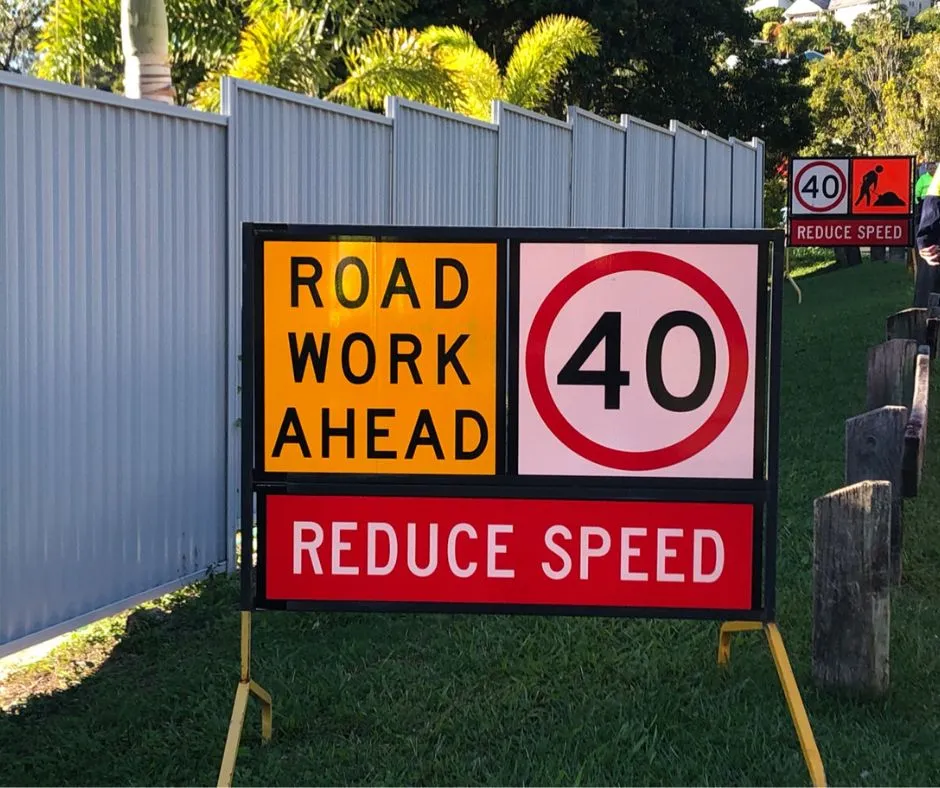
In the March 2025 publication cycle, TMR updated the Queensland MUTCD Part 3, several parts of the Queensland Guide to Temporary Traffic Management (QGTTM), the Traffic Management for Works on Roads (TMWOR) guideline, and specifications MRTS02 and MRTS14. Among the changes: increased sign and device spacing options in the QGTTM, and — notably — a clarification of options for end-of-queue control measures in the TMWOR, alongside a new recommendation for Portable Traffic Signal (PTSS) operations and a new section on congestion signage.
Read together, the May 2025 and July 2026 newsletters tell a consistent story: TMR has been steadily tightening and clarifying the technical guidance around EOQ for well over a year, and the July newsletter is a direct call to make sure that guidance is actually being applied — and re-applied — throughout the life of every worksite, not just at the design stage.
Queensland’s technical standards are also designed to align with the Austroads Guide to Temporary Traffic Management (AGTTM) wherever practical. Following an updated AGTTM Part 8 in February 2025, TMR clarified that QGTTM Part 8 would remain harmonised with the earlier, superseded edition until a future publication cycle formally updates it — a reminder that Queensland practitioners should keep working to the current QGTTM Part 8 rather than the newer Austroads edition, until TMR advises otherwise.
A Broader Push on Road Worker Safety
The safety focus wasn’t limited to technical standards. The Traffic Management Association of Australia (TMAA) has been campaigning for Google Maps, Apple Maps, and Waze to adopt a stronger, action-oriented audio warning — “Slow down for road workers” — already used successfully in safety campaigns across Australia, the UK, and the US. And in the lead-up to Fatality Free Friday, the Australian Road Safety Foundation called on individuals, businesses, schools, and community groups to get behind the initiative and help reinforce safe driving behaviour around worksites.
For more detail on the current QGTTM, MUTCD, and TMWOR requirements, TMR’s Temporary Traffic Management page is the best starting point.
A Shared Responsibility
As Dennis Walsh put it, every person travelling through a road worksite — and every worker delivering those works — deserves to return home safely. Effective EOQ management is a shared responsibility across designers, implementers, supervisors, and the traffic controllers on the ground.
For workers, that means staying alert to changing conditions on site and knowing when a control measure needs to be escalated. For employers and site supervisors, it means building EOQ review into routine site checks rather than treating it as a one-off, set-and-forget design decision — and making sure your team’s training keeps pace with a framework that has genuinely been evolving since early 2025.
How Upskills QLD Can Help
Well-trained, competent traffic management personnel are at the heart of effective EOQ control — whether that’s a Traffic Controller adjusting signage as a queue grows, or a Traffic Management Implementer reviewing whether a Traffic Guidance Scheme still holds up as conditions change.
Upskills QLD delivers nationally recognised training across Queensland to help your team build and maintain that competence, including:
- White Card Course
- Traffic Controller (TC) Course
- Traffic Management Implementer (TMI) Course
- TC Renewals and TMI Renewals
Whether you’re reviewing your team’s skills in light of TMR’s latest Safety Alert, or planning ahead for upcoming projects, getting the right people qualified — and keeping their knowledge current — is one of the most practical steps you can take to keep everyone on site, and everyone driving past it, safe.
See the full range of Traffic Management Courses, our High Risk Courses, and more on Brian’s Blog.
📞 1300 627 681 📧 [email protected] 🌐 www.upskillsqld.com.au


